
Spring TX Spray Foam Insulation – North Houston's Hot, Humid Residential Corridor
Elite Conroe Spray Foam provides spray foam insulation for Spring homes, commercial properties, attics, walls, crawl spaces, and metal structures. Hot summers and substantial regional rainfall make thermal performance, air leakage, and moisture-aware insulation planning important considerations for area buildings. Call 936-286-4557 to discuss your property and current service availability.
Problems
Hot, Humid Conditions Can Expose Insulation and Air-Leakage Problems
Spring experiences hot, humid conditions and substantial annual rainfall, making heat and moisture important considerations when evaluating insulation. Heat transfer through attics and roof assemblies, along with air leakage through gaps and penetrations, can affect indoor comfort and temperature consistency. Properties throughout Spring include existing homes, newer construction, workshops, and commercial buildings with different insulation requirements. Where appropriate, spray polyurethane foam can provide thermal resistance and reduce unwanted air movement, with the foam type and application determined by the building assembly, ventilation, moisture conditions, and intended performance.
Top Services
Attic Spray Foam Insulation for Spring Homes
Attics are a practical area to evaluate because roof assemblies are exposed to prolonged summer heat. Regional climate normals show average summer highs above 92°F from June through August, making roof and attic insulation important components of the building envelope.
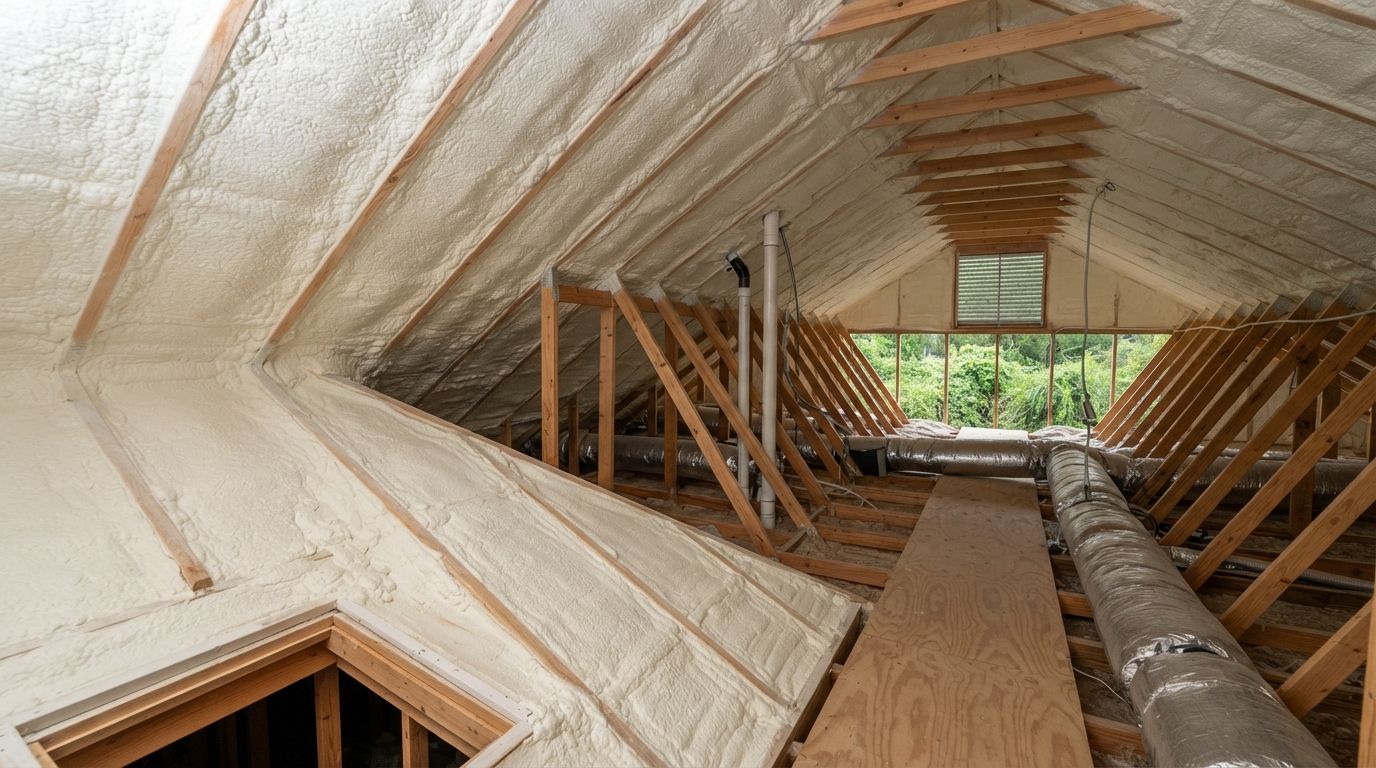
Spray foam may be installed at an appropriate roof deck or other suitable attic surface as part of a planned insulation strategy. Before application, trained technicians should consider existing insulation, roof conditions, ventilation, HVAC or duct locations, moisture concerns, and accessibility. Open-cell and closed-cell foam have different properties, so material selection should reflect the specific attic assembly rather than treating either product as universally preferable.
Wall Spray Foam for New Construction and Renovations
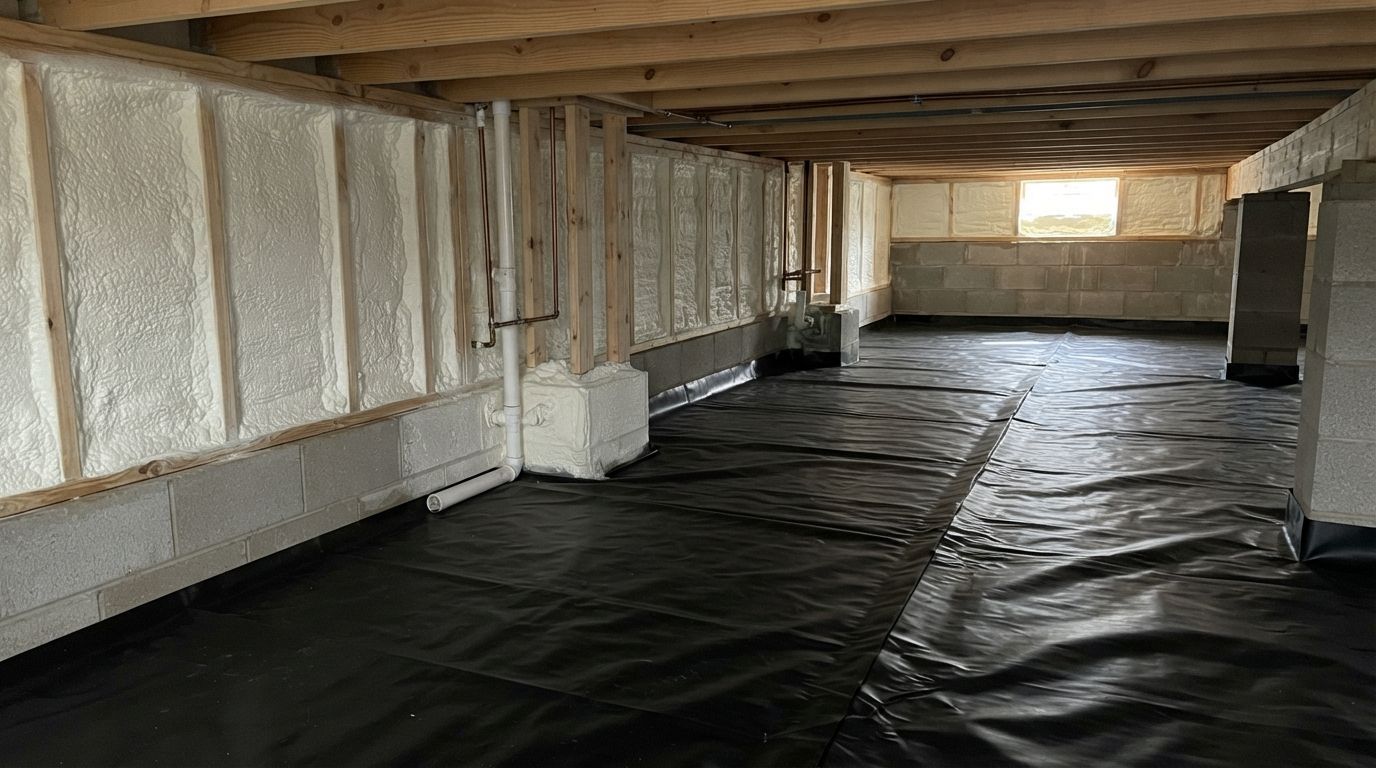
Properties around Spring's I-45, SH 99, Spring Stuebner Road, and FM 2920 corridors include building conditions where wall insulation may be evaluated during new construction, additions, or substantial remodeling. Spray foam can be installed in suitable open wall cavities when framing, sheathing, penetrations, and application surfaces are accessible.
Professional wall applications require appropriate surface preparation, controlled installation, and attention to electrical, plumbing, framing, and other building components. Existing finished walls require separate evaluation because standard spray foam application is not automatically appropriate without cavity access. During renovation, exposed framing also provides an opportunity to inspect existing insulation and air-leakage paths before new material is installed.
Metal Building Spray Foam Insulation
Metal workshops, garages, storage structures, and commercial buildings present a different insulation problem from framed residential walls. Metal conducts heat readily, and interior metal surfaces can also experience condensation when their temperature falls below the surrounding air's dew point.
Spray foam may be applied to compatible metal substrates to provide thermal resistance and help control unwanted air movement across treated areas. Surface condition, moisture, corrosion, cleanliness, foam selection, preparation, and required coverage should be evaluated first. In Spring's warm, moisture-prone regional climate, insulation should be considered alongside ventilation and overall moisture management rather than treated as a stand-alone condensation solution.
Cost
What Affects Spray Foam Insulation Cost in Spring?
Spray foam insulation cost depends on application size, foam type, required coverage or thickness, accessibility, substrate condition, preparation requirements, and whether existing insulation or damaged material requires attention. An attic, accessible wall cavity, crawl space, and metal structure can each involve different labor, equipment, and material requirements.
Property type and the intended thermal and air-control strategy also influence project scope. An on-site assessment allows technicians to review accessible conditions and measurements before preparing a property-specific estimate.
Areas We Serve
Nearby Service Areas Around Spring
Elite Conroe Spray Foam
Why Choose Elite Conroe Spray Foam?
Professional spray foam work begins with evaluating the building assembly instead of choosing a product solely by name. Trained service professionals can review existing insulation, accessible surfaces, moisture conditions, ventilation, penetrations, substrate condition, and the intended thermal and air-control strategy before recommending an application.
Proper surface preparation, professional spray equipment, controlled application, safety-focused procedures, and attention to product-specific curing and re-entry guidance are important parts of installation. For Spring properties, this approach accounts for regional heat and moisture conditions while recognizing that each building may require a different insulation strategy.
FAQs
Frequently Asked Questions About Spray Foam Insulation in Spring
Is spray foam suitable for Spring's hot and humid conditions?
It can be appropriate when the product and building assembly are selected correctly. Regional climate normals document hot summers and substantial rainfall, so insulation planning should consider thermal resistance, air control, ventilation, moisture conditions, and condensation potential together.
Should Spring homes use open-cell or closed-cell spray foam?
Neither material is automatically appropriate for every property. Open-cell and closed-cell foam differ in density, thermal characteristics, and vapor permeability. Roof design, wall construction, application location, moisture conditions, and applicable building requirements should guide material selection.
Can spray foam be installed over existing attic insulation?
That depends on the intended building-envelope strategy and the condition of existing materials. Technicians should evaluate accessible insulation, moisture staining, roof conditions, air-leakage paths, HVAC equipment, and ventilation details first. Existing material may remain, require adjustment, or need removal depending on project conditions.
Why are attics an important insulation area in Spring?
Houston Intercontinental's 1991–2020 climate normals show average highs above 92°F throughout June, July, and August. Because roof assemblies receive substantial heat exposure, attic insulation and air-control details can play an important role in limiting heat transfer toward conditioned areas.
How long does spray foam installation take?
Timing depends on the size and accessibility of the application area, preparation requirements, foam type, existing conditions, and required coverage. Product-specific ventilation, curing, and re-entry instructions can also affect when treated areas can be occupied normally after installation.
Request a Free Quote
We will get back to you as soon as possible.
Please try again later.